

What Is a Dental Crown? – Complete Guide to Uses, Types & Procedure
What Is a Dental Crown? – Complete Guide to Uses, Types & Procedure

A healthy, intact tooth does more than just complete your smile — it helps you chew, speak clearly, and maintain jaw structure. But what happens when a tooth becomes cracked, decayed, or weakened? That’s where a dental crown comes in. Think of a crown as a protective “cap” that restores strength, function, and aesthetics to a compromised tooth.
At Smile Lounge Dentistry, located at 264 Main Street East, Milton, ON, L9T 1P2, we specialize in providing high-quality dental crowns tailored to each patient’s needs. If your tooth is damaged, weakened, or simply doesn’t look the way you want — we can help. Call us at +1 905-636-6444 to schedule your consultation.
What Is a Dental Crown?
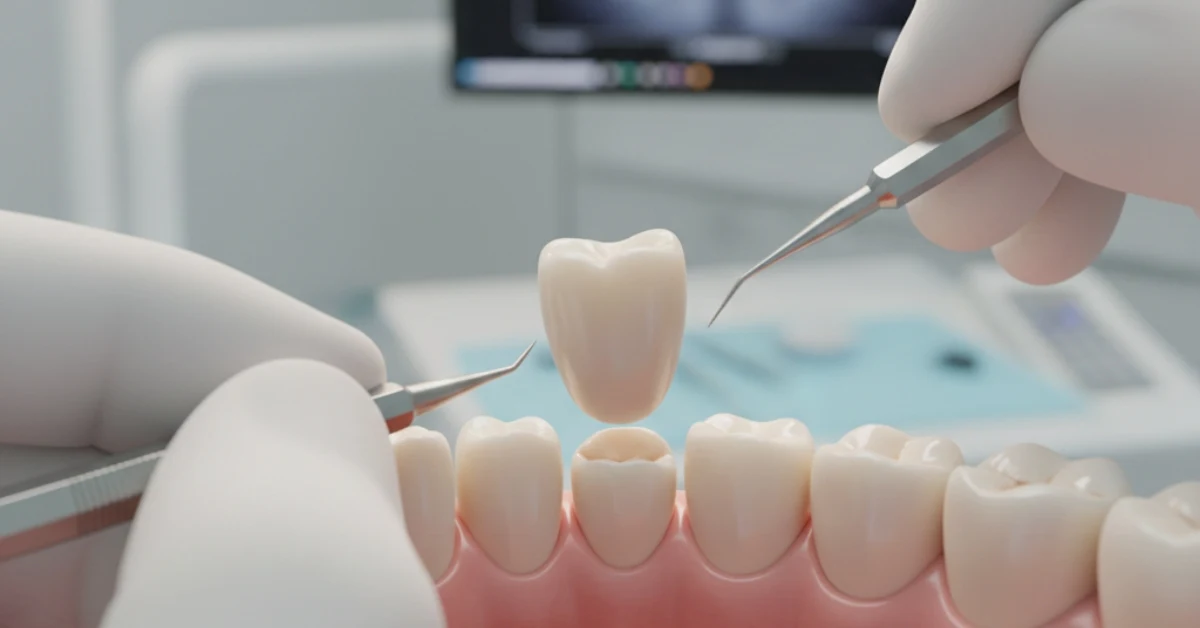
A dental crown is a custom-made “cap” that completely covers a damaged or weakened tooth — covering the visible portion above the gum line. Once cemented in place, the crown restores the tooth’s shape, size, strength and appearance. In effect, it becomes the new outer surface of your natural tooth.Crowns are important because teeth that are too damaged may not hold a regular filling or patch — and could break or deteriorate further without proper support. A crown stabilizes and protects, letting you chew, bite, and smile with confidence again.
When Do You Need a Dental Crown?
Dental crowns are typically recommended for:
1. Large Tooth Decay
When a cavity removes too much tooth structure, a crown restores strength and function.
2. After Root Canal Therapy
Root-treated teeth can become brittle; a crown protects them from cracking.
3. Cracked or Broken Teeth
Crowns hold the tooth together and prevent further damage.
4. Severely Worn-Down Teeth
Grinding, clenching, or wear over time can flatten teeth — crowns restore shape and bite height.
5. Cosmetic Improvements
Crowns can correct discoloration, shape issues, or other aesthetic concerns.
6. Covering Dental Implants
Implant crowns serve as the visible tooth replacement.
7. Supporting a Dental Bridge
Crowns anchor prosthetic teeth in a bridge.
Types of Dental Crowns
1. Porcelain-Fused-to-Metal (PFM) Crowns
Durable and natural-looking; suitable for both front and back teeth.
2. All-Ceramic or All-Porcelain Crowns
Highly aesthetic; ideal for front teeth.
3. Zirconia Crowns
Extremely strong, chip-resistant, and suitable for molars and high-bite pressure.
4. Metal Crowns (Gold or Alloy)
Very durable; great for molars where appearance is less important.
5. Temporary Crowns
Short-term crowns used while the final crown is being crafted.
Step-by-Step Dental Crown Procedure
Step 1: Consultation & Examination
The dentist evaluates the tooth, reviews X-rays, and confirms if a crown is needed.
Step 2: Tooth Preparation
Decay is removed and the tooth is shaped to create room for the crown.
Step 3: Impression or Digital Scan
A precise mold or digital scan is taken to ensure a perfect fit.
Step 4: Temporary Crown Placement
A temporary crown protects the tooth until the permanent one is ready.
Step 5: Permanent Crown Placement
The custom crown is placed, adjusted, and securely bonded.
Step 6: Bite Adjustment & Final Check
The dentist ensures proper bite alignment and comfort.
How Long Do Dental Crowns Last?
On average, dental crowns last:
- 10–15 years for porcelain or ceramic crowns
- 15–20+ years for zirconia or metal crowns
Longevity depends on oral hygiene, bite pressure, grinding habits, and regular dental care.
How to Care for Your Dental Crown
To maximize your crown’s lifespan:
- Brush and floss daily
- Avoid chewing hard foods or objects
- Wear a night guard if you grind your teeth
- Schedule regular dental checkups
- Report any looseness or discomfort immediately
Dental Crowns at Smile Lounge Dentistry in Milton
At Smile Lounge Dentistry, we focus on durable, natural-looking crowns that blend seamlessly with your smile. Our team uses high-quality materials and advanced technology to deliver comfortable and long-lasting results.
Frequently Asked Questions (FAQs)
1. Are dental crowns painful?
No. Local anesthesia makes the procedure comfortable. Mild sensitivity afterward is temporary.
2. How long does the dental crown procedure take?
Typically two visits: one for preparation and impressions, another for crown placement. Some clinics offer same-day crowns depending on technology.
3. What is the best type of crown?
The best crown depends on tooth location, bite pressure, and cosmetic goals. Your dentist will recommend the best option for you.
4. How long do crowns last?
With proper care, most crowns last 10–20 years or longer.
5. Can a crown fall off?
Rarely. If it does, contact your dentist right away — many crowns can be re-cemented.
6. Do crowns look natural?
Yes. Modern crowns are color-matched and shaped to blend seamlessly with your natural teeth.
Conclusion
A dental crown is a reliable, long-lasting solution for damaged, weakened, or cosmetically compromised teeth. It restores strength, protects your natural tooth, and enhances your smile’s appearance.
If you’re considering a dental crown in Milton, Smile Lounge Dentistry is here to help. Call +1 905-636-6444 to schedule your consultation.
Related posts


Write a Comment
Recent Posts

What Is a Dental Crown? – Complete Guide to Uses, Types & Procedure

What Are the Types of Dental Fillings? A Complete Guide for Patients

How Much Does It Cost for a Dental Cleaning? A Complete Patient Guide