

Are Whitening Strips Bad for Your Teeth? | Smile Lounge Dentistry
Whitening strips are everywhere. They are cheap, easy, and promise a brighter smile at home. But are they safe? The honest answer is: it depends.
Smile Lounge Team
Smile Lounge Dentistry · Milton, ON
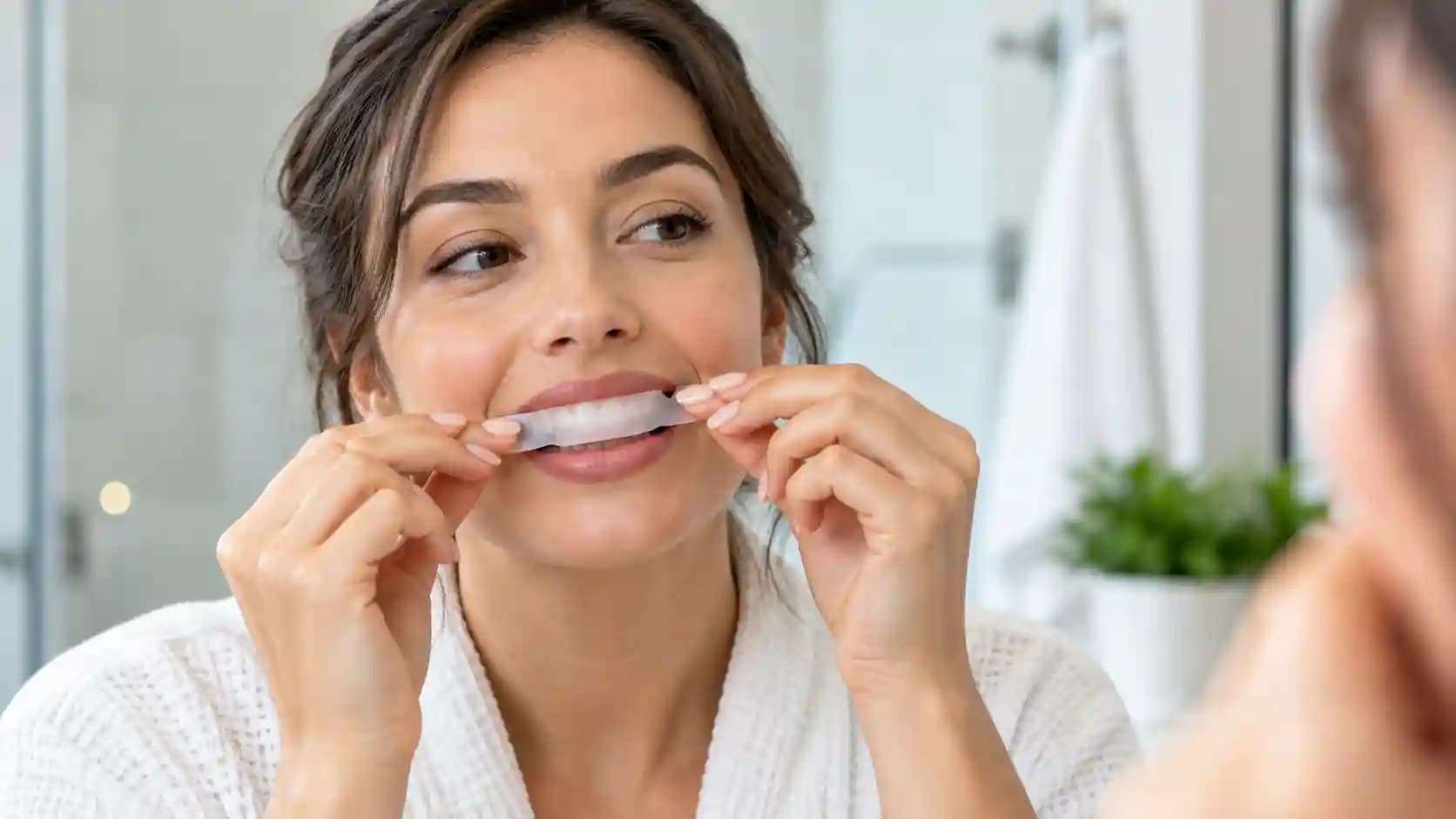
Whitening strips are everywhere. They are cheap, easy, and promise a brighter smile at home.
But are they safe? The honest answer is: it depends.
Used correctly, most strips are safe for healthy teeth. Used wrongly or too often, they can cause real problems.
Let us break it down. As a dental team at this trusted Dental Clinic in Milton, we are asked about strips almost every week.
How Whitening Strips Work
Whitening strips are thin, flexible plastic. They are coated with a whitening gel.
That gel contains a bleaching agent. Usually it is hydrogen peroxide or carbamide peroxide.
You press the strip onto your teeth. The peroxide soaks into the enamel. It breaks down the stains that have built up over time.
The result is a lighter shade. Most strips show some change within one to two weeks.
So, Are They Actually Bad for Your Teeth?
Here is the balanced view. Whitening strips are not inherently harmful.
The active ingredient is the same type used by dentists. The difference is strength and control.
Store-bought strips use lower concentrations. That makes them safer for home use.
Problems usually come from misuse. Leaving strips on too long. Using them too often. Ignoring early warning signs.
In short, the strips are not the villain. Overuse is.
Common Side Effects of Whitening Strips
Even safe products can cause side effects. Here are the most common ones.
Tooth Sensitivity
This is the number one complaint. The peroxide can reach the nerve layer of the tooth.
The result is a sharp twinge with hot or cold. It usually fades after a few days.
But heavy use can make it worse. Some people feel sensitive for weeks.
Gum Irritation
Strips do not fit everyone's teeth perfectly. The gel can touch your gums.
Peroxide can irritate soft gum tissue. You may notice redness or a burning feeling.
Keeping the gel off your gums helps a lot.
Uneven Results
Strips are flat. Teeth are not.
They may miss gaps, edges, and curved areas. This can leave patchy or streaky colour.
Crowded or crooked teeth whiten less evenly.
Enamel Concerns From Overuse
Your enamel is strong but not indestructible. Frequent, aggressive whitening can wear it down over time.
Thin enamel looks duller, not brighter. It also feels more sensitive.
This is why more is never better with whitening.
Who Should Be Careful With Whitening Strips
Strips are not right for everyone. Take extra care if any of these apply to you.
- You have sensitive teeth already.
- You have gum disease or receding gums.
- You have cavities or cracked teeth.
- You have crowns, veneers, or fillings on front teeth.
- You are pregnant or breastfeeding.
- You are under the age of a teenager.
Whitening does not change the colour of dental work. So mixed results are common with crowns or fillings.
If you are unsure, a quick checkup clears things up fast.
How to Use Whitening Strips Safely
If your teeth are healthy, you can lower your risk with a few simple rules.
Follow the instructions exactly. Do not leave strips on longer than directed.
Do not use them more often than the box says. More sessions will not speed things up.
Wipe excess gel off your gums. Keep it on the enamel only.
Stop if you feel sharp or lasting pain. That is a signal, not a normal step.
Give your teeth breaks between rounds. Let them recover.
Strips vs Professional Whitening
At-home strips have a place. They are affordable and convenient.
But they are limited. The gel is weaker and the fit is generic.
Professional whitening is stronger and safer. It is applied under control, with your gums protected.
A visit to a teeth whitening clinic in Milton gives faster, more even results. We also check your teeth first, so whitening never hurts a hidden problem.
For many people, one professional session beats weeks of strips.
When Whitening Will Not Work
Whitening only lifts certain kinds of stains. It does not fix everything.
Deep, internal stains often resist strips. So does discolouration from old dental work or injury.
In these cases, bleaching alone falls short. A different cosmetic option may suit you better.
Dental veneers in Milton can cover stubborn stains for good. They create a bright, uniform look that whitening cannot always reach.
The right choice depends on what is causing your discolouration.
How Long Do Whitening Strips Take to Work?
Patience matters with strips. They work slowly.
Most people see a change in one to two weeks. Full results can take the whole course.
The shade also keeps settling after you finish. Give it a few days before you judge it.
Rushing never helps. Doubling up will not speed things along. It only raises your risk.
Do Whitening Strips Work on Everyone?
No, and that is worth knowing. Strips work best on yellow surface stains.
They struggle with grey or brown tones. Deep, internal stains often resist them too.
They also cannot change the colour of dental work. Crowns, veneers, and fillings stay the same shade.
If your teeth do not respond, do not keep piling on strips. A dentist can explain why and suggest a better route.
How Strips Compare on Cost
Strips look cheap at first glance. A single box is affordable.
But the cost adds up. Repeat boxes and frequent top-ups stack over time.
Professional whitening costs more upfront. Yet it lasts longer and works faster.
Over a year, the gap often narrows. Value is about more than the sticker price.
Caring for Your Teeth After Whitening
The hours after whitening matter. Your enamel is more porous for a short while.
Avoid dark drinks right after a session. Coffee, tea, and wine can stain fresh teeth.
Stick to lighter foods for a day. Water is your best friend here.
Keep brushing gently and stay consistent. Good care protects your new brightness.
A Quick Word on Sensitive Teeth
Sensitive teeth need extra thought. Whitening can make them feel worse.
If cold already bothers you, go slow. Choose a gentler option or ask a dentist first.
There are sensitivity-friendly approaches. You do not have to suffer for a brighter smile.
When to See a Dentist
Whitening should never be painful. Mild, short sensitivity is normal. Lasting pain is not.
See a dentist if sensitivity does not settle within a few days. Do the same for sore or bleeding gums.
Book a visit if your teeth look patchy or oddly coloured. That may point to something beneath the surface.
A checkup before whitening is always smart. It makes sure your enamel and gums are ready.
The Bottom Line
Whitening strips are not bad for your teeth on their own. The danger lies in overuse and misuse.
Use them carefully. Watch for warning signs. Do not chase a brighter shade by using more.
For safe, even, lasting results, professional care is hard to beat. If you want a brighter smile without the guesswork, we are happy to help.
Written by
Smile Lounge Team
Our team shares practical, evidence-based oral-health guidance from our clinic in Milton, Ontario. Have a question about this article? We are happy to help.
Have a question about your teeth?
Book a visit at our Milton clinic — new patients welcome.
More from the blog
View all
How Long Does Teeth Whitening Last? A Dentist’s Guide
Wondering how long teeth whitening lasts? Professional whitening results can remain noticeable for several months to a few years, depending on your habits and oral care routine. Discover what affects whitening longevity, how to prevent new stains, and dentist-recommended tips to keep your smile brighter for longer.
Read article
How Cosmetic Dentistry Can Improve Your Smile and Confidence
Discover how cosmetic dentistry can improve your smile and confidence through treatments that address tooth colour, shape, alignment, and other aesthetic concerns.
Read article
Can Toothache Cause Headache? Causes, Symptoms & When to See a Dentist
Can toothache cause headache? Explore possible connections, symptoms to watch for, and when to see a dentist for an assessment.
Read article