

Bone Grafting for Dental Implants: What You Need to Know
Learn what bone grafting for dental implants involves, why it may be needed, how the procedure works, recovery expectations, and what to discuss with your dentist.
Smile Lounge Team
Smile Lounge Dentistry · Milton, ON
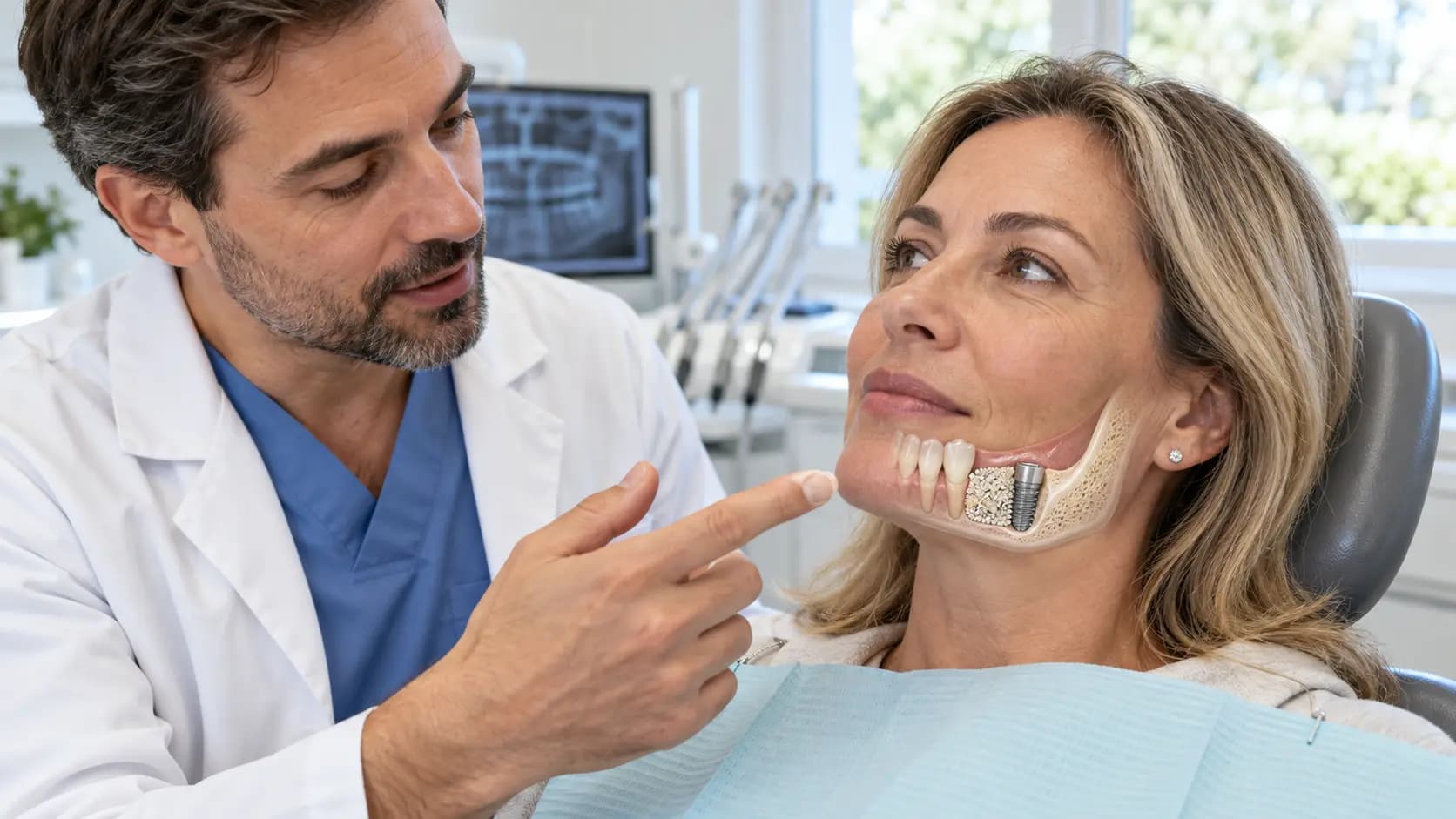
Dental implants need enough healthy jawbone to remain stable. When the jawbone has lost height or width, bone grafting for dental implants may help rebuild the area and create a suitable foundation for an implant.
Bone loss can occur after tooth loss, gum disease, dental infection, injury, or prolonged denture use. However, not everyone who needs a dental implant requires bone grafting. A dental examination and appropriate imaging are needed to determine whether enough bone is available.
If you are considering an implant, a consultation at a dental clinic in Milton can help you understand your jawbone condition, treatment options, and expected timeline.
What Is Dental Bone Grafting?
Dental bone grafting is a surgical procedure used to preserve or rebuild bone in a specific area of the jaw.
The jawbone provides the foundation that supports a dental implant. If the bone is too narrow or has lost height, there may not be enough surrounding bone to provide the stability required for implant placement.
During grafting, a suitable material is placed in the affected area. It provides a framework that can support new bone formation during healing. Over time, natural bone can develop around the graft.
The outcome can depend on the size and location of the bone defect, oral health, smoking or nicotine use, medical conditions, medications, and healing response.
Why Does Jawbone Loss Occur?
Natural tooth roots help stimulate the surrounding jawbone. After a tooth is removed, this stimulation decreases, and the bone may gradually change in shape and volume.
Common causes of jawbone loss include:
- Long-term missing teeth
- Advanced gum disease
- Dental infections
- Injury involving the jaw or teeth
- Difficult tooth extractions
- Naturally thin bone
- Long-term denture use
- Limited bone beneath the sinus in the upper jaw
The amount of bone loss cannot be determined simply by looking at the mouth. Dental imaging provides important information about the available bone.
How Is the Need for a Bone Graft Determined?
The process normally begins with a review of your dental and medical history. Your dentist will examine your teeth, gums, bite, and proposed implant area.
Dental X-rays may be used to assess the treatment site. In some cases, three-dimensional imaging, such as a cone-beam CT scan, may provide additional information about the bone and nearby structures.
Your dentist may also consider factors that could affect healing, including:
- Active gum disease or infection
- Smoking or nicotine use
- Diabetes and other medical conditions
- Certain medications
- Previous jaw treatment
- Oral hygiene
- Proposed implant position
Tell your dental provider about your medical conditions, medications, allergies, and supplements before treatment.
What Types of Bone Graft Materials Are Used?
Bone graft materials can come from different sources. The choice depends on the location and size of the defect and the treatment plan.
Common types include:
- Autograft: Bone taken from another area of the patient's body.
- Allograft: Processed bone obtained from a human donor.
- Xenograft: Processed material obtained from an animal source.
- Alloplast: A synthetic bone substitute.
Each material has different applications, benefits, and limitations. Your dentist can explain which material is recommended and why it may be appropriate for your situation.
Common Types of Dental Bone Grafting
Socket Preservation
Socket preservation is performed around the time of a tooth extraction. Graft material is placed into the empty socket to help limit changes to the bone during healing.
Ridge Augmentation
Ridge augmentation can rebuild an area where the jawbone has become too narrow or has lost height. This may help create enough bone for a future implant.
Sinus Augmentation
A sinus augmentation may be considered when there is insufficient bone in the upper back jaw. Additional bone may sometimes be needed because the sinus is positioned close to this area.
Localised Bone Grafting
A smaller bone defect may be treated with a localised graft around a proposed implant site.
Can the Bone Graft and Implant Be Placed Together?
In some cases, a small bone graft can be performed at the same time as implant placement. In other situations, the graft needs to heal before the implant can be inserted.
The decision depends on the amount of remaining bone, implant stability, size and location of the defect, gum health, presence of infection, and type of grafting procedure.
When grafting is performed separately, it may add several months to the overall treatment process. Healing times vary between patients and procedures.
You can learn more about implant treatment through the dental implants in Milton service page.
What Happens After Bone Grafting?
Some swelling, bruising, tenderness, and minor bleeding may occur after surgery. Your dental team will provide instructions based on your procedure.
These may cover:
- Pain management
- Cleaning the area
- Medications
- Suitable foods
- Physical activity
- Smoking and alcohol
- Follow-up appointments
Avoid disturbing the surgical site and follow your dentist's instructions carefully. Contact your dental clinic if you experience persistent bleeding, worsening swelling, fever, severe pain, discharge, or other concerning symptoms.
How Long Does a Bone Graft Take to Heal?
Gum tissue may begin healing relatively quickly, but the underlying bone usually requires more time. Depending on the procedure, healing may take several months before the area is ready for implant treatment.
Healing can be influenced by the size and location of the graft, graft material, oral health, nicotine use, infection control, medications, and postoperative care.
Your dentist will assess the area before determining whether it is ready for implant placement.
What Are the Possible Risks?
Bone grafting is a surgical procedure and has potential risks, including:
- Pain, swelling, or bruising
- Bleeding
- Infection
- Delayed healing
- Exposure or loss of graft material
- Inadequate bone formation
- Need for additional treatment
- Altered sensation
- Sinus-related complications with some upper-jaw procedures
Smoking or nicotine use can interfere with healing. Your dentist can explain the risks that specifically apply to your procedure and health history.
Are There Alternatives to Bone Grafting?
Bone grafting is not necessary for every missing tooth. Depending on your situation, alternatives may include:
- Conventional dental bridges
- Resin-bonded bridges
- Removable partial dentures
- An alternative implant position or treatment design
- Leaving the space untreated when appropriate
Each option has different benefits, limitations, costs, and maintenance requirements. If implant treatment is not suitable, dental bridges may be another option to discuss with your dentist.
Questions to Ask Before Treatment
Before agreeing to a bone graft, consider asking:
- Why do I need a bone graft?
- What type of graft will I receive?
- What material will be used?
- Can the graft and implant be completed together?
- How long might healing take?
- What are my individual risks?
- Are there alternatives?
- What happens if the graft does not heal as expected?
- What will the total treatment cost include?
Having these questions answered can help you understand the treatment process and make an informed decision.
Final Thoughts
Bone grafting for dental implants may help rebuild an area where insufficient jawbone could otherwise make implant placement difficult. However, it is not automatically required for every implant patient.
A dental examination, appropriate imaging, and review of your medical and dental history can help determine whether grafting is appropriate and which approach may be suitable.
Dental information notice: This article provides general educational information and does not replace a dental examination, diagnosis, or personalized treatment advice. Treatment suitability, risks, healing time, and outcomes vary between patients.
Written by
Smile Lounge Team
Our team shares practical, evidence-based oral-health guidance from our clinic in Milton, Ontario. Have a question about this article? We are happy to help.
Have a question about your teeth?
Book a visit at our Milton clinic — new patients welcome.
More from the blog
View all
Are Whitening Strips Bad for Your Teeth? | Smile Lounge Dentistry
Whitening strips are everywhere. They are cheap, easy, and promise a brighter smile at home. But are they safe? The honest answer is: it depends.
Read article
How Long Does Teeth Whitening Last? A Dentist’s Guide
Wondering how long teeth whitening lasts? Professional whitening results can remain noticeable for several months to a few years, depending on your habits and oral care routine. Discover what affects whitening longevity, how to prevent new stains, and dentist-recommended tips to keep your smile brighter for longer.
Read article
How Cosmetic Dentistry Can Improve Your Smile and Confidence
Discover how cosmetic dentistry can improve your smile and confidence through treatments that address tooth colour, shape, alignment, and other aesthetic concerns.
Read article