

Dental Implants vs Dentures: Which Is Better for You?
Dental implants or dentures? Compare the benefits, comfort, maintenance, and costs of each option to help you discuss the right choice with your dentist.
Smile Lounge Team
Smile Lounge Dentistry · Milton, ON
Missing teeth affect more than your bite. They affect your confidence too.
Two options lead the way. Dental implants and dentures. Both restore your smile.
But they work very differently. My job is not to push one choice. It is to help you understand both.
Our welcoming dental clinic in Milton starts every plan with your goals, not a sales pitch.
Understanding the Two Options
First, know what each one is.
What Are Dental Implants?
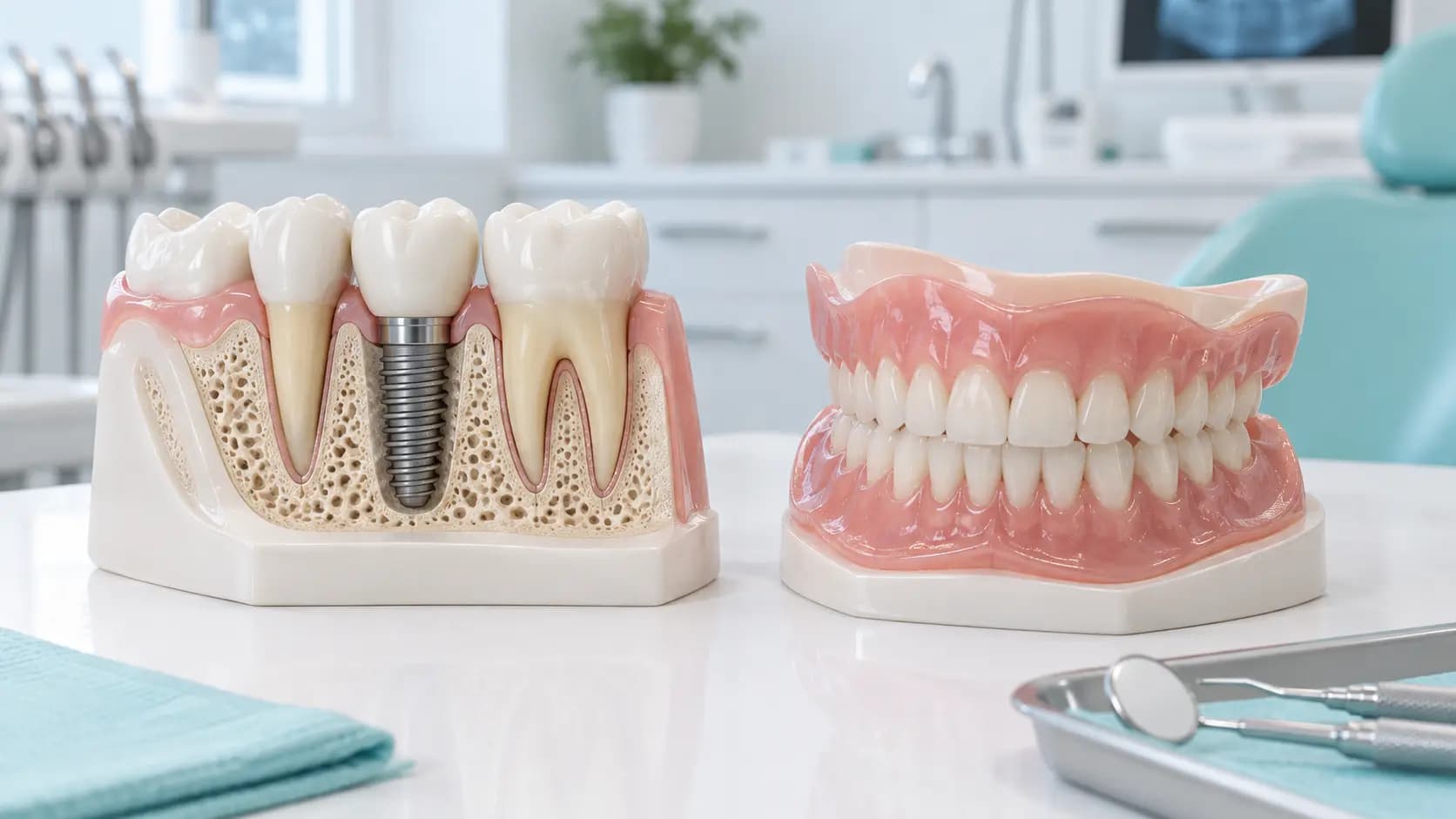
An implant is a small titanium post. It acts as an artificial tooth root.
It is placed into the jawbone. Over a few months, it fuses with the bone.
Then a custom crown goes on top. The result looks and feels like a real tooth.
Implants can replace one tooth, several teeth, or a full arch.
What Are Dentures?
Dentures are removable. They sit over your gums to replace missing teeth.
A full denture replaces a whole arch. A partial denture fills gaps between natural teeth.
They are trusted, non-surgical, and quicker to make.
Both restore your smile. The real differences show up in comfort, cost, and care.
Comfort and Feel
This matters most to many patients. Implants stay firmly in place.
You forget they are even there. No slipping. No clicking. No adhesive.
Modern dentures are comfortable too. A good fit can feel very natural.
Still, they rest on the gums. Some people need time to adjust. A few find they can shift while eating.
Regular adjustments help a great deal.
Stability and Chewing
Implants have the edge here. They restore near-full bite strength.
The force travels through the post into the jaw. Just like a natural tooth.
Dentures handle most foods well. Some patients go easy on very hard or sticky items.
Want denture convenience with more grip? Fixed dental implants in Milton can also anchor a removable set.
It blends stability with flexibility.
Bone Health Over Time
Here is a fact many people miss. When a tooth is lost, the jawbone beneath it slowly shrinks.
Implants help with this. By replacing the root, they stimulate the bone.
This keeps your jaw strong. It also helps preserve your facial shape.
Dentures sit on top of the gums. They do not stimulate bone the same way.
So the jaw can keep shrinking underneath. Dentures may need relines as your gums change.
Care and Longevity
Implants are simple to care for. You brush and floss them like natural teeth.
With good hygiene, they can last for decades.
Dentures need a different routine. You remove them to clean. You soak them overnight.
You handle them with care to avoid breakage. They are also replaced or adjusted more often.
Our natural-looking dentures are made to fit well and look real. We show you exactly how to keep them in top shape.
Cost and Value
Let me be honest about cost. Dentures cost less upfront. That makes them accessible.
Implants cost more at the start. They need surgery and custom parts.
But look at the long term. Implants last longer. They need fewer replacements.
Over many years, the gap narrows.
Dentures cost less now. But they may need remakes and adjustments.
The right answer depends on your budget, your health, and your priorities.
Think about daily life too. Less maintenance. More confidence at meals. Fewer future visits.
These carry real value that a price tag alone can miss.
How Long Does Each Option Take?
Timing is a fair question. The two paths are quite different.
Dentures are usually faster. They can often be ready in a few weeks.
Implants take longer. The post must fuse with the bone first. This can take a few months.
Good things are worth the wait. But if you need a quick solution, dentures have the edge.
Are You a Good Candidate for Implants?
Not everyone is ready for implants right away. A quick assessment tells us more.
You generally need healthy gums. You also need enough jawbone to hold the post.
Smoking and some health conditions can slow healing. We factor these in.
If your bone is thin, options still exist. Grafting can rebuild support. We explain every step.
Caring for Your New Smile
Both options last longer with good care. The habits differ slightly.
For implants, brush and floss daily. Keep up with regular checkups. Treat them like natural teeth.
For dentures, clean them daily. Soak them overnight. Handle them gently.
Either way, routine visits keep everything fitting and working well.
What About Combining Both?
You do not always have to choose just one. A blend can work beautifully.
Implant-supported dentures are a popular middle path. A few implants hold a removable set firmly in place.
You get the stability of implants. You keep the convenience of dentures.
For many patients, this offers the best of both worlds.
Common Myths, Cleared Up
A few myths make this choice harder. Let us clear them up.
Myth: dentures are only for older people. In truth, tooth loss can happen at any age.
Myth: implants are painful. Most patients report little discomfort with modern care.
Myth: implants always cost too much. Over years, their long life can offset the price.
Myth: one option suits everyone. The truth is simple. The right choice is personal.
Your Confidence Matters Too
This choice is about more than teeth. It is about how you feel.
A stable smile helps you eat the foods you love. It helps you speak with ease.
It also lets you laugh in photos without a second thought.
Never overlook the value of that confidence.
So, Which One Is Right for You?
There is no single winner. Only the best fit for you.
Implants may suit you if you have healthy gums and enough bone. They feel the most natural. They are a long-term investment.
Dentures may suit you if you want a non-surgical option. They replace many teeth affordably. They offer a faster path to a full smile.
Your health, your jawbone, and your goals all shape the choice.
That is why a proper consultation matters.
Questions to Ask at Your Consultation
A good consultation clears up doubts. Come prepared with a few questions.
Ask which option suits your jaw and gums. Ask about the timeline and the cost.
Ask how to care for your new teeth. Ask what results you can expect.
The more you know, the more confident you feel.
The Canada Dental Care Plan
Cost worries stop many people from seeking care. Support may be available.
The Canada Dental Care Plan helps eligible patients with treatment costs.
Ask our team if you qualify. We are happy to explain how it works.
Let's Find the Right Fit for Your Smile
Missing teeth do not have to mean a missing smile.
Implants, dentures, or a mix of both. The first step is a friendly talk.
Come in. Ask every question on your mind. Let us help you smile with full confidence again.
Written by
Smile Lounge Team
Our team shares practical, evidence-based oral-health guidance from our clinic in Milton, Ontario. Have a question about this article? We are happy to help.
Have a question about your teeth?
Book a visit at our Milton clinic — new patients welcome.
More from the blog
View all
How to Get Rid of Stains on Teeth: Dentist-Approved Tips
Tooth stains can develop from coffee, tea, tobacco, aging, and everyday habits. Learn how to get rid of stains on teeth, understand the difference between surface and deeper discolouration, and explore safe cleaning and whitening options recommended by dental professionals.
Read article
Are Whitening Strips Bad for Your Teeth? | Smile Lounge Dentistry
Whitening strips are everywhere. They are cheap, easy, and promise a brighter smile at home. But are they safe? The honest answer is: it depends.
Read article
How Long Does Teeth Whitening Last? A Dentist’s Guide
Wondering how long teeth whitening lasts? Professional whitening results can remain noticeable for several months to a few years, depending on your habits and oral care routine. Discover what affects whitening longevity, how to prevent new stains, and dentist-recommended tips to keep your smile brighter for longer.
Read article