

Invisalign vs. Clear Aligners: Which Is Right for You?
Learn the key differences between Invisalign and clear aligners, including appearance, comfort, treatment planning, and what to consider when choosing the right option for your smile.
Smile Lounge Team
Smile Lounge Dentistry · Milton, ON
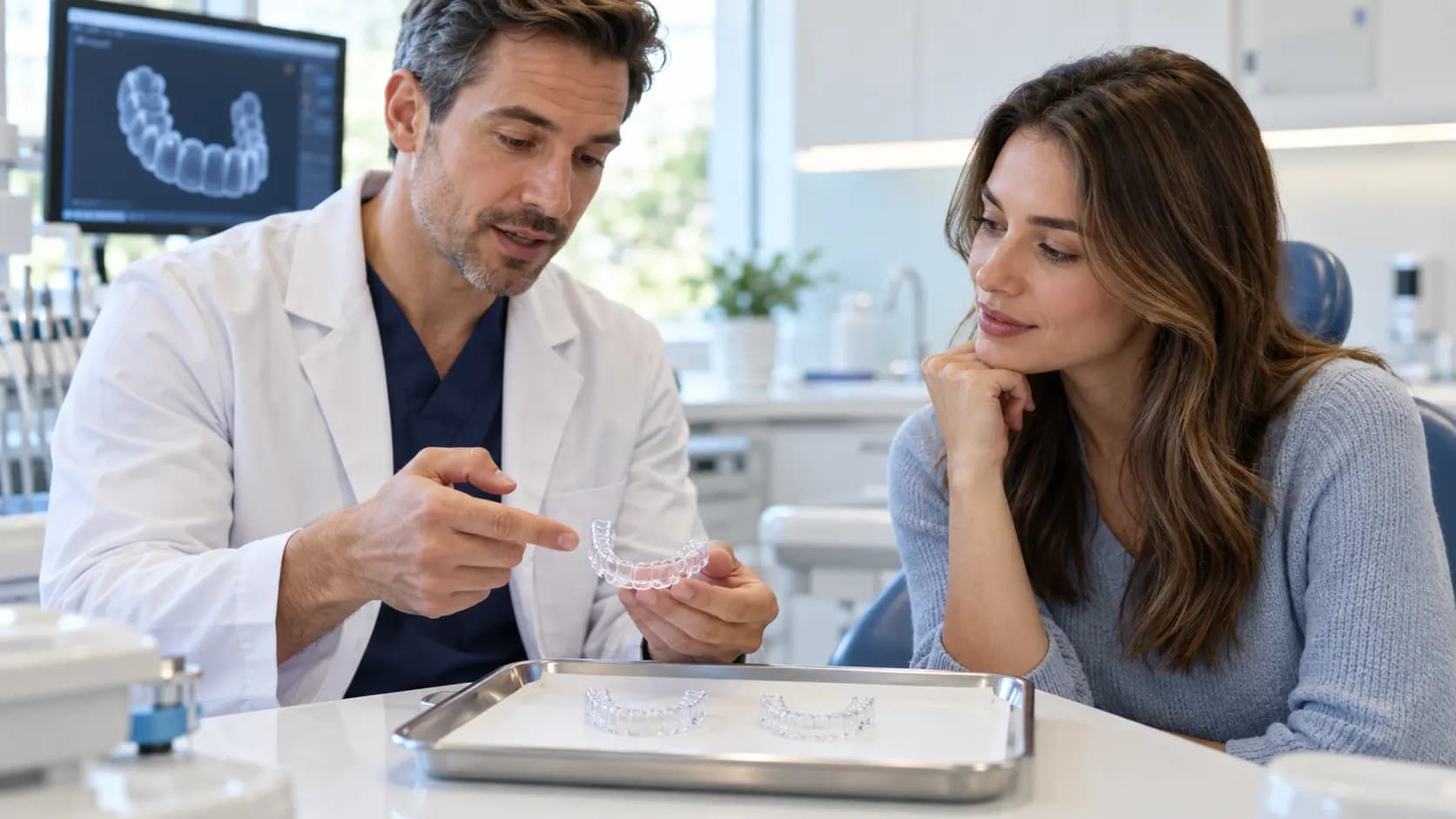
If you want to straighten your teeth without traditional metal braces, you may be comparing Invisalign vs. clear aligners. The key point is that Invisalign is itself a type of clear aligner treatment.
Invisalign is a specific brand produced by Align Technology, while “clear aligners” is a general term for several brands and treatment systems. Different systems may vary in materials, digital planning, treatment features, pricing, and clinical support.
Choosing an aligner system involves more than comparing brands or prices. A dentist should assess your teeth, gums, bite, and overall orthodontic needs before recommending treatment.
A consultation at a dental clinic in Milton can help you understand your options and whether clear aligner treatment is suitable for you.
Payment Plan Options: Clear aligner treatment can be a significant investment, so payment plan options may be available for eligible patients. Payment plan options are subject to change without prior notice. Please check with the office for current payment plan details, eligibility, and the overall cost of treatment.
Invisalign vs. Clear Aligners: What Is the Difference?
Invisalign is one clear aligner system among several available options. It uses a series of customized, transparent trays designed to gradually move teeth.
Other clear aligner systems work on a similar principle but may differ in:
- Aligner materials
- Digital treatment-planning software
- Tray design
- Attachment options
- Treatment protocols
- Refinement policies
- Monitoring schedules
- Pricing
The brand is only one part of treatment. Your diagnosis, treatment plan, provider's experience, and ability to follow the recommended wear schedule can all affect the outcome.
How Do Clear Aligners Work?
Clear aligners apply controlled pressure to selected teeth. Each tray is designed to make part of the planned movement. After wearing one set for the prescribed period, you move to the next set.
Treatment may also involve tooth-coloured attachments, elastics, minor reshaping between teeth, or additional refinement aligners.
Because tooth movement involves the teeth, gums, and supporting bone, treatment should be monitored by a qualified dental professional.
What Can Clear Aligners Treat?
Depending on the patient's condition and treatment system, clear aligners may help with:
- Crowded teeth
- Gaps between teeth
- Crooked or rotated teeth
- Certain overbites
- Certain underbites
- Some crossbites
- Some open bites
- Teeth that have shifted after previous orthodontic treatment
However, aligners are not appropriate for every orthodontic problem. Complex tooth movements, significant jaw discrepancies, or severe bite problems may require fixed braces or other orthodontic treatment.
A complete assessment of the bite is important rather than focusing only on the appearance of the front teeth.
What Happens During Clear Aligner Treatment?
1. Dental Assessment
Your provider examines your teeth, gums, bite, and jaw relationship. Problems such as tooth decay, active gum disease, or infection may need treatment before orthodontic movement begins.
2. Diagnostic Records
Digital scans, photographs, and dental X-rays may be taken. These records help evaluate tooth roots, supporting bone, and the relationship between the upper and lower teeth.
3. Treatment Planning
Specialized software is used to plan the proposed tooth movements. A digital preview can help explain the treatment goals, but it should not be considered a guarantee of the final result.
4. Aligner Delivery
Your provider checks the fit of the aligners and explains how to insert, remove, and clean them. Small attachments may be placed on certain teeth when needed.
5. Progress Monitoring
Regular appointments allow your provider to check whether your teeth are moving as planned. Adjustments or additional aligners may be required if treatment does not progress as expected.
6. Retention
After active treatment, retainers are normally needed to help maintain the new tooth positions. Teeth can shift again if retainers are not worn as directed.
How Long Should You Wear Clear Aligners?
Invisalign generally recommends wearing its aligners for approximately 20 to 22 hours per day, although you should follow the instructions provided by your treating dental professional.
Aligners are normally removed for:
- Eating
- Drinking anything other than plain water
- Brushing
- Flossing
- Cleaning the trays
Leaving aligners out for extended periods can interfere with the planned treatment schedule.
What Should You Compare When Choosing a System?
Instead of focusing only on the brand, consider the complete treatment package.
Professional Assessment
Ask whether your treatment includes an in-person examination and appropriate diagnostic records.
Provider Experience
Ask about your provider's experience with clear aligner treatment and how they manage cases that do not progress as planned.
Suitability
The provider should explain why a particular system is appropriate for your orthodontic needs and whether braces or another option may be more suitable.
Progress Monitoring
Find out how often your treatment will be checked and who will monitor your progress.
Refinements and Replacement Trays
Ask whether additional aligners are included if your teeth do not reach their planned positions and what happens if an aligner is lost or damaged.
Retainers and Total Cost
Confirm whether retainers, diagnostic records, refinements, and replacement trays are included in the quoted price.
What Are the Advantages of Clear Aligners?
Possible advantages include:
- Less noticeable than traditional metal braces
- Removable trays
- Easier brushing and flossing
- No food restrictions while trays are removed
- Digital treatment planning
- Convenient for some social and professional situations
These benefits depend on wearing and caring for the aligners correctly.
What Are the Limitations and Risks?
Clear aligners require consistent daily wear and may not be suitable for every case. Possible issues include temporary tooth tenderness, gum irritation, speech changes, lost or damaged trays, and teeth not moving as planned.
Other potential risks of orthodontic treatment include changes to the bite, gum problems, tooth decay when oral hygiene is inadequate, shortening of tooth roots, and relapse after treatment.
Your provider should explain the risks that apply specifically to your teeth, gums, and proposed treatment.
Are Mail-Order Aligners the Same as Dentist-Supervised Treatment?
Mail-order or direct-to-consumer aligners should not automatically be considered equivalent to professionally supervised treatment.
Without appropriate examination and monitoring, problems such as untreated decay, gum disease, bone loss, impacted teeth, or developing bite problems may be missed.
Before choosing an aligner service, ask:
- Who is responsible for your treatment?
- Will you receive an in-person examination?
- Are dental X-rays required?
- How will your progress be monitored?
- How will complications be managed?
- Can you contact the treating provider directly?
Questions to Ask Your Dentist
Before beginning treatment, consider asking:
- Am I suitable for clear aligners?
- Why are you recommending this particular system?
- Would braces be another option?
- How long might treatment take?
- How many hours should I wear the aligners?
- Will I need attachments or elastics?
- How often will my progress be checked?
- Are refinement aligners included?
- Are retainers included?
- What are the risks in my specific case?
- What happens if an aligner no longer fits?
Invisalign or Clear Aligners: Making an Informed Choice
The decision should not be based only on advertising or the lowest price. Your teeth, gums, bite, treatment goals, and ability to follow the wear schedule all matter.
Invisalign is one established clear aligner system, while other professionally supervised systems may also be suitable for certain patients. Some complex cases may be better managed with traditional braces or specialist orthodontic treatment.
If you are considering clear aligner treatment, learn more about Invisalign in Milton. You can also explore cosmetic dentistry in Milton if you are interested in other ways to improve your smile.
Written by
Smile Lounge Team
Our team shares practical, evidence-based oral-health guidance from our clinic in Milton, Ontario. Have a question about this article? We are happy to help.
Have a question about your teeth?
Book a visit at our Milton clinic — new patients welcome.
More from the blog
View all
Are Whitening Strips Bad for Your Teeth? | Smile Lounge Dentistry
Whitening strips are everywhere. They are cheap, easy, and promise a brighter smile at home. But are they safe? The honest answer is: it depends.
Read article
How Long Does Teeth Whitening Last? A Dentist’s Guide
Wondering how long teeth whitening lasts? Professional whitening results can remain noticeable for several months to a few years, depending on your habits and oral care routine. Discover what affects whitening longevity, how to prevent new stains, and dentist-recommended tips to keep your smile brighter for longer.
Read article
How Cosmetic Dentistry Can Improve Your Smile and Confidence
Discover how cosmetic dentistry can improve your smile and confidence through treatments that address tooth colour, shape, alignment, and other aesthetic concerns.
Read article