
Types of Dental Implants: Options, Benefits & Differences
Dental implants offer several options for replacing missing teeth, from single-tooth implants to implant-supported bridges and full-arch restorations. Learn how different types of dental implants work, their benefits, important differences, and the factors dentists consider when recommending treatment.
Smile Lounge Team
Smile Lounge Dentistry · Milton, ON
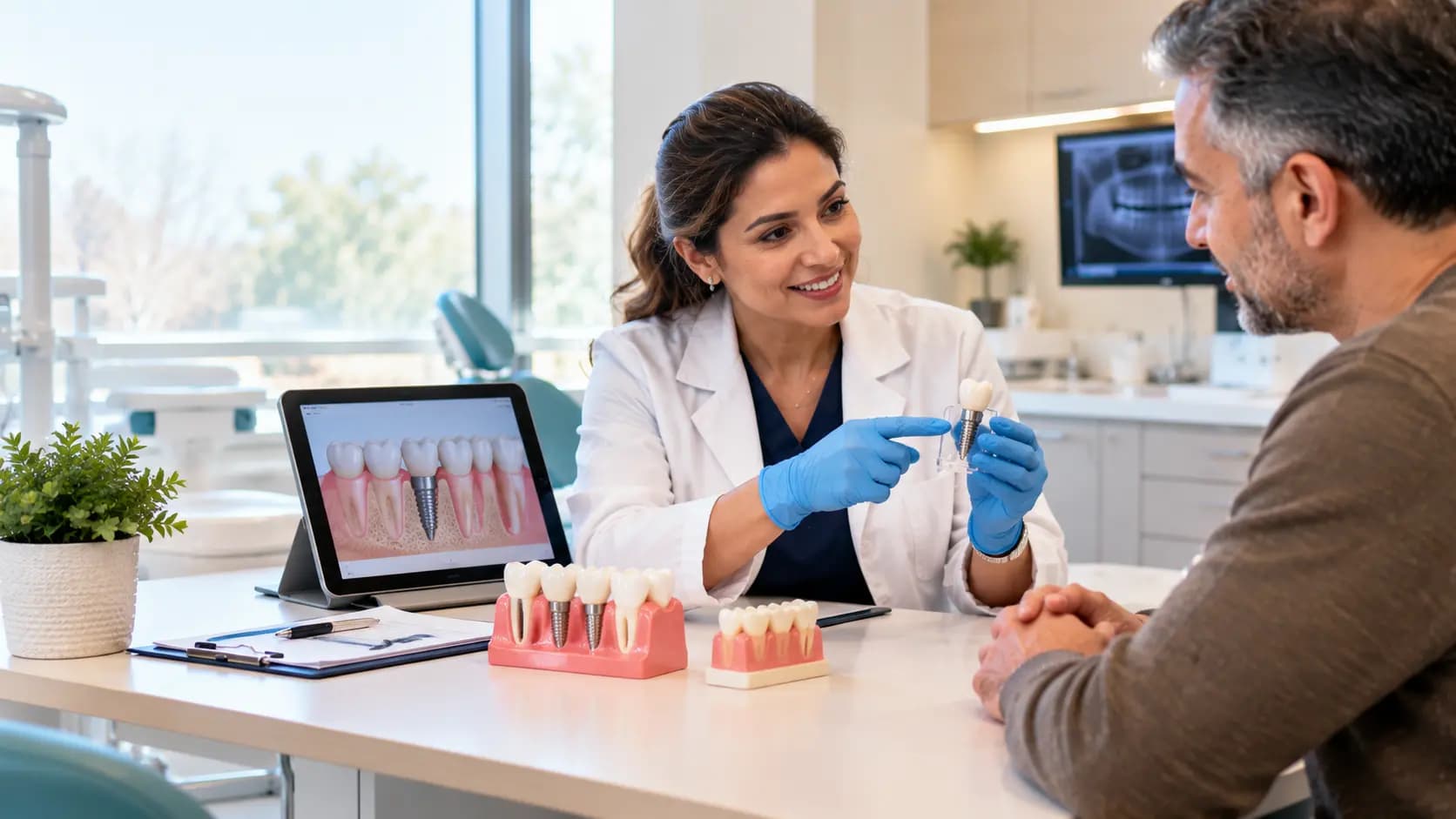
Missing teeth can affect your appearance, chewing ability, speech, and confidence. Dental implants offer a long-term tooth replacement option designed to restore function and support oral health.
However, not every implant treatment is the same. Different types of dental implants are available depending on how many teeth are missing, your jawbone condition, and your dental needs.
If you're considering treatment, consulting a dentist in Milton can help you understand your options.
This guide explains the main dental implant solutions, their benefits, differences, and factors to consider before treatment.
What Are Dental Implants?
Dental implants are artificial tooth roots, usually made from titanium, that are surgically placed into the jawbone.
After healing, the implant supports a dental crown, bridge, or denture.
A typical implant restoration includes three components:
- Implant post: A fixture placed into the jawbone.
- Abutment: A connector between the implant and restoration.
- Restoration: The visible crown, bridge, or denture.
Implants are designed to provide stable support for replacement teeth. Their suitability depends on the patient's oral health, bone structure, and treatment requirements.
1. Single-Tooth Dental Implants
A single-tooth implant replaces one missing tooth without requiring support from neighbouring teeth.
It usually consists of one implant post, an abutment, and a custom dental crown.
Benefits
- Replaces an individual missing tooth.
- Helps restore chewing function.
- Provides a natural-looking replacement.
- Avoids preparing neighbouring healthy teeth for a conventional bridge.
Single-tooth implants may be suitable for patients with one missing tooth and sufficient healthy jawbone.
However, treatment requires a professional assessment to evaluate gum health, bone support, and overall suitability.
2. Multiple-Tooth Dental Implants
When several teeth are missing, multiple implants may support individual crowns or a dental bridge.
An implant-supported bridge can replace several adjacent missing teeth without necessarily requiring one implant for every tooth.
Benefits
- Replaces multiple missing teeth.
- Provides stable support for chewing.
- May preserve neighbouring natural teeth.
- Can reduce reliance on removable appliances.
The number of implants required depends on the location of missing teeth, available bone, and planned restoration.
Your dentist will determine the appropriate arrangement after examining your mouth.
3. Implant-Supported Dentures
Implant-supported dentures use dental implants to help retain and stabilize a denture.
Unlike conventional dentures, which rely primarily on the gums for support, these appliances attach to implants.
Some implant-supported dentures are removable for cleaning, while others are fixed and removed only by a dental professional.
Benefits
- Improved denture stability.
- Less movement during eating or speaking.
- Potential improvement in comfort.
- Reduced dependence on denture adhesives.
Patients considering this treatment should discuss cleaning requirements, maintenance, and whether a removable or fixed design is appropriate.
4. Full-Arch Dental Implants
Full-arch implant restorations replace an entire upper or lower arch of missing teeth.
Instead of using an individual implant for every missing tooth, several strategically positioned implants support a complete restoration.
Some full-arch approaches use four or more implants, depending on clinical requirements.
Benefits
- Replaces a complete arch of teeth.
- Provides a fixed restoration in suitable cases.
- Improves stability compared with some removable options.
- Supports chewing and everyday oral function.
Full-arch treatment requires detailed planning, sufficient bone support, and consideration of long-term maintenance.
Not every patient is a candidate for the same approach.
5. Comparing the Main Types of Dental Implants
Implant solution | Common purpose |
|---|---|
Single-tooth implant | Replacing one missing tooth |
Implant-supported bridge | Replacing several adjacent teeth |
Implant-supported denture | Stabilizing a partial or complete denture |
Full-arch implants | Replacing most or all teeth in one arch |
Each option serves different needs.
For example, a patient missing one tooth may only require a single implant, while someone missing most of their teeth may benefit from a full-arch assessment.
The appropriate treatment depends on individual clinical findings.
6. Endosteal vs. Zygomatic Implants
Dental implants can also be categorized by their placement and design.
Endosteal implants are the most commonly used type. They are placed directly into the jawbone and support various restorations.
Zygomatic implants are longer implants anchored in the cheekbone rather than the upper jaw. They may be considered in selected complex cases involving significant upper-jaw bone loss.
Zygomatic implants require specialized surgical expertise and are not routine replacements for conventional implants.
Your dentist can explain whether standard implant treatment is suitable or whether specialist assessment is necessary.
7. Benefits of Dental Implant Treatment
Dental implants offer several potential advantages.
They can restore chewing ability, support replacement teeth, and provide a natural-looking smile.
Implants also stimulate surrounding bone through functional loading, helping limit bone loss in the treated area.
Unlike conventional tooth-supported bridges, implant restorations may avoid reshaping healthy adjacent teeth.
However, implants still require regular oral hygiene, professional monitoring, and occasional maintenance.
They are not immune to complications, including inflammation around the implant or mechanical damage.
8. Who Is a Suitable Candidate?
Dental implant suitability depends on several factors:
- Healthy gums and controlled oral disease.
- Adequate jawbone volume.
- General medical health.
- Tobacco use and healing risks.
- Ability to maintain oral hygiene.
- Commitment to follow-up appointments.
Patients with insufficient bone may require additional treatment, such as bone grafting.
At Smile Lounge Dentistry, dental implant services in Milton include individualized assessments to determine appropriate tooth replacement options.
A consultation helps establish whether implants are suitable for your circumstances.
9. What Happens During Dental Implant Treatment?
Treatment generally begins with an examination and appropriate imaging.
The dentist evaluates bone structure, oral health, and the location of missing teeth.
If treatment is suitable, the implant is surgically placed.
Healing allows the surrounding bone to integrate with the implant. This process can take several months, depending on the individual.
After sufficient healing, the final restoration is attached.
Some patients need additional procedures or temporary restorations.
Your dental team should explain the expected treatment stages, recovery instructions, and possible risks beforehand.
10. How Much Do Dental Implants Cost?
Dental implant costs vary according to the treatment required.
Important factors include the number of implants, restoration type, imaging, materials, and whether bone grafting or other procedures are necessary.
Single-tooth replacement generally involves different costs from full-arch rehabilitation.
Dental insurance coverage may also vary.
Request a personalized treatment estimate rather than relying on general online prices.
Frequently Asked Questions
1. What are the main types of dental implants?
Common solutions include single-tooth implants, implant-supported bridges, implant-supported dentures, and full-arch restorations.
2. Which type of dental implant is best?
There is no universally best option. The appropriate treatment depends on missing teeth, bone health, and individual dental needs.
3. Are dental implants permanent?
Implants are designed for long-term use, but they are not guaranteed to last forever. Restorations may require maintenance or replacement.
4. Is dental implant treatment painful?
Local anaesthesia is commonly used during placement. Temporary swelling or discomfort may occur afterward.
5. How long does dental implant treatment take?
Treatment may take several months, depending on healing, implant placement, and additional procedures.
6. Can dental implants replace all missing teeth?
Yes, full-arch implant restorations may replace an entire arch of teeth in suitable patients.
Explore Dental Implant Options in Milton
Understanding the different types of dental implants helps you make informed decisions about tooth replacement.
Whether you need one tooth replaced or are considering a complete restoration, professional evaluation is essential.
Smile Lounge Dentistry provides dental implant consultations and restorative dental care at 264 Main Street East, Milton, Ontario.
Contact Smile Lounge Dentistry or call 905-636-6444 to discuss your treatment options.
Disclaimer: This article provides general dental information and does not replace a clinical examination or individualized treatment advice.
Written by
Smile Lounge Team
Our team shares practical, evidence-based oral-health guidance from our clinic in Milton, Ontario. Have a question about this article? We are happy to help.
Have a question about your teeth?
Book a visit at our Milton clinic — new patients welcome.
More from the blog
View all
How to Get Rid of Stains on Teeth: Dentist-Approved Tips
Tooth stains can develop from coffee, tea, tobacco, aging, and everyday habits. Learn how to get rid of stains on teeth, understand the difference between surface and deeper discolouration, and explore safe cleaning and whitening options recommended by dental professionals.
Read article
Are Whitening Strips Bad for Your Teeth? | Smile Lounge Dentistry
Whitening strips are everywhere. They are cheap, easy, and promise a brighter smile at home. But are they safe? The honest answer is: it depends.
Read article
How Long Does Teeth Whitening Last? A Dentist’s Guide
Wondering how long teeth whitening lasts? Professional whitening results can remain noticeable for several months to a few years, depending on your habits and oral care routine. Discover what affects whitening longevity, how to prevent new stains, and dentist-recommended tips to keep your smile brighter for longer.
Read article